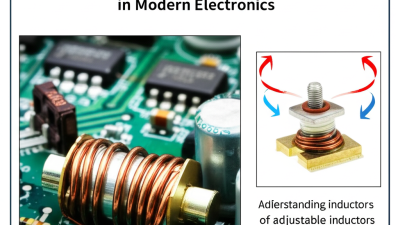
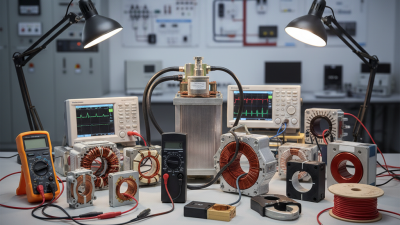
Navigating the world of electronics can be pretty tricky sometimes, especially when it comes to picking the right components. One part that often gets overlooked but is actually super important is the Smd Inductor. Even though they’re tiny, these little guys pack a punch—helping out with filtering signals, storing energy, and keeping voltages steady in circuits. Dr. Emily Tran, who’s really knowledgeable about passive components at Electronics Innovators Co., once said, “Choosing the right Smd Inductor is key to making your circuit work efficiently and meet your performance goals.”
Now, with tons of options out there, it can feel overwhelming—whether you're just starting out or you've been in the game for a while. You need to look at stuff like inductance, current capacity, the small amount of resistance, and the size. As tech keeps pushing forward, everyone’s looking for smaller, better inductors. That means designers are constantly trying to strike a balance between performance, how much space it takes up, and how well it handles heat. If you really get what these factors mean and how they affect your project, you’ll be in a much better position to pick an Smd Inductor that fits your needs—and actually makes your project better overall.

Understanding SMD Inductors: Types and Their Applications
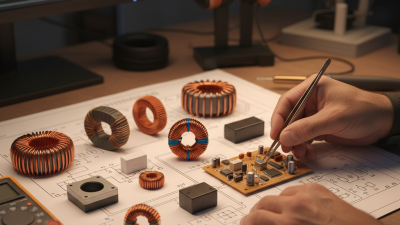
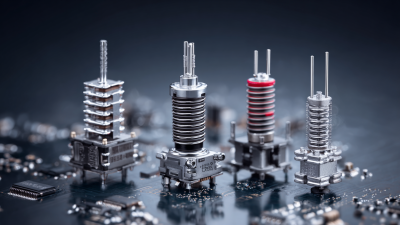
Smd Inductors, or Surface-Mount Device inductors, play a crucial role in modern electronics by managing electrical currents and providing essential filtering in various circuits. These components come in different types, each designed for specific applications. Common types include ceramic, ferrite, and compositeinductors, with each type offering unique characteristics that make them suitable for different scenarios. For instance, Ceramic Inductors are known for their high-frequency capabilities, making them ideal for RF applications, while ferrite inductors are better suited for power supply circuits due to their efficiency in handling higher currents.
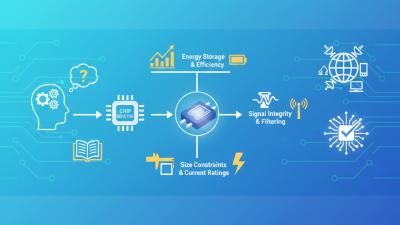
In addition to their types, understanding their applicationsis key to selecting the right Smd Inductor for your project. Low-profile applications often benefit from the compact size of these components, and they are widely employed in signal filtering, energy storage, and noise suppression. Switching power supplies, DC-DC converters, and audio equipment frequently utilize Smd Inductors to improve performance and reduce electromagnetic interference. Hence, recognizing the specific requirements of your project—such as size constraints, current rating, and operating frequency—will guide you in choosing the most appropriate Smd Inductor that meets your design goals.
Key Specifications to Consider When Selecting SMD Inductors
When selecting the right surface-mount device (SMD) inductor for your electronics project, several key specifications should be considered to ensure optimal performance and reliability. One of the most critical factors is inductance value, typically measured in microhenries (µH). According to a market report by ResearchAndMarkets, the demand for high-frequency inductors has surged significantly, with inductance values ranging from 1 µH to over 100 µH being crucial for applications such as DC-DC converters and RF systems. It's essential to match the inductance value with the circuit requirements to avoid performance issues.
Another important specification is the current rating, often described as the saturation current. This parameter indicates the maximum current the inductor can handle before its inductance value begins to decrease. A report from Technavio highlights that inductors with higher saturation current ratings are increasingly preferred for automotive and telecommunications applications. Designers must carefully evaluate their circuit's current demands and choose an inductor with a saturation current that adequately exceeds those needs to prevent inefficiencies or component failure.
Additionally, consider the DC resistance (DCR), which affects both the efficiency and thermal performance of your circuit. Lower DCR values reduce power losses and improve thermal management. According to a study by Grand View Research, the trend towards miniaturization in electronic devices has led to a growing interest in high-efficiency inductors. Ensuring that the selected Smd Inductor has an adequate DCR specification can significantly enhance overall system performance, making it a vital aspect of the selection process.
Inductor Loss Factors: DC Resistance vs. AC Resistance
When selecting the appropriate Smd Inductor for electronic projects, understanding the distinctions between DC resistance (DCR) and AC resistance (ACR) is crucial in ensuring optimal performance. DC resistance is a measure of the inductor's resistance to direct current; it is essential for determining power loss when the inductor is conducting steady-state direct current. A lower DCR typically indicates less energy wasted as heat, which can enhance overall circuit efficiency, particularly in low-power applications.
On the other hand, AC resistance accounts for the additional losses that occur when the inductor operates with alternating current. These losses are influenced not only by the material properties of the inductor but also by frequency and the magnetic fields generated during operation. Factors such as skin effect, which leads to increased resistance at higher frequencies, and proximity effect, which can cause non-uniform current distribution in the winding, contribute considerably to ACR.
Therefore, when designing circuits that involve high frequencies or pulsed signals, careful consideration of ACR is essential to avoid unexpected temperature rises and performance degradation in inductors.
Understanding these resistance factors aids designers in selecting the right inductor for their specific applications, ensuring efficiency, stability, and performance integrity across various operating conditions.
Calculating Inductance Value for Your Specific Project Needs
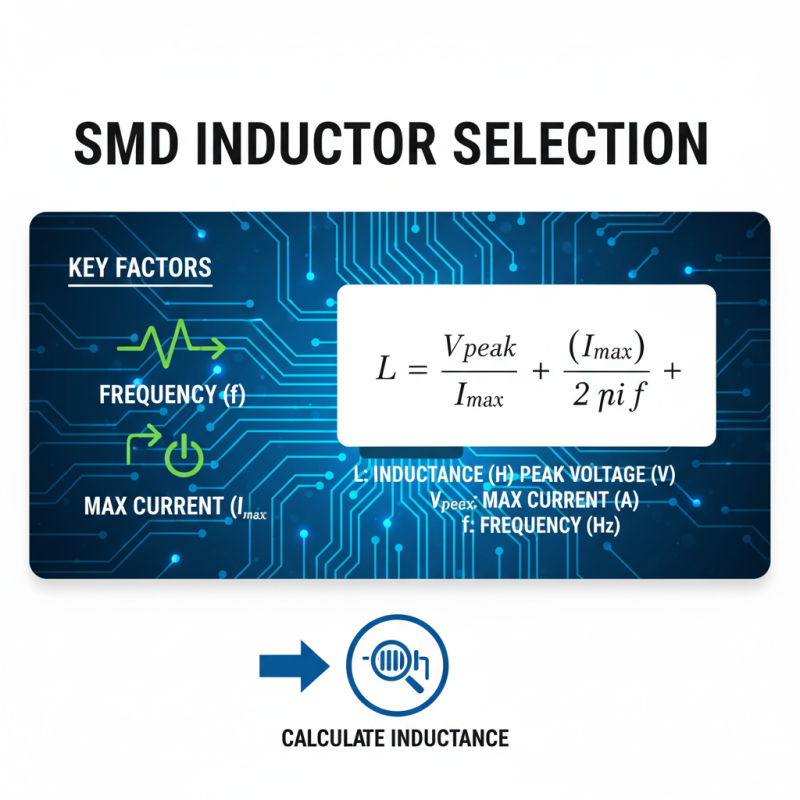
When selecting the appropriate Smd Inductor for your electronics project, it is crucial to calculate the inductance value tailored to your specific requirements. The inductance, measured in henries (H), determines how much magnetic energy the inductor can store. Begin by assessing the frequency of your circuit and the current it will handle. Use the formula \( L = \frac{V_{\text{peak}}}{I_{\text{max}} \times 2 \pi f} \), where \( L \) is the inductance, \( V_{\text{peak}} \) is the peak voltage, \( I_{\text{max}} \) is the maximum current, and \( f \) is the frequency. This calculation provides a good starting point for your design.
Tips: When choosing your inductance value, also consider the application type—whether it's for filtering, energy storage, or power conversion—as different applications may require varying inductance profiles. Additionally, ensure to leave some margin in your calculations—opting for a slightly higher inductance than the bare minimum can enhance reliability and performance.
Another aspect to keep in mind is the inductor's size and current rating. Compact designs may require smaller inductors, but these often carry a lower current rating. Verify your project’s thermal requirements as well—the inductors must not only meet the inductance needs but also handle the thermal load generated during operation. Properly selecting the right Smd Inductor with these considerations will significantly impact the success of your electronics project.
Temperature and Size Constraints in SMD Inductor Selection
When selecting a surface-mount device (SMD) inductor for an electronics project, temperature and size constraints are crucial factors to consider. Inductors generate heat during operation, influenced by factors such as current flow and frequency. It’s essential to ensure that the chosen inductor can operate comfortably within the expected temperature range of your application. An inductor that heats beyond its rated temperature can lead to performance degradation or failure, affecting overall circuit reliability. Pay attention to the inductor's thermal characteristics, including its rated temperature and self-heating behavior under maximum load conditions.
Size is equally significant, especially in compact electronics designs where space is at a premium. The footprint and height of the SMD inductor must align with the design specifications of your PCB layout. It’s important to balance size with performance; smaller inductors may have lower current ratings or higher equivalent series resistance (ESR), which could impact efficiency. Assessing the physical dimensions alongside the electrical specifications will help ensure that the selected inductor meets both the performance requirements and the spatial constraints of your project, enabling a successful integration into your design without compromising functionality.
Evaluating Manufacturer Data Sheets for Performance Insights
When embarking on an electronics project that requires the selection of a Surface Mount Device (SMD) inductor, a detailed analysis of manufacturer data sheets becomes crucial. These documents provide essential insights into the inductor's performance characteristics, such as inductance value, current rating, resistance, and temperature coefficient. According to a report by the Electronics Components Industry Association (ECIA), accurate performance metrics are vital; for instance, a deviation as low as 10% in inductance can significantly affect circuit functionality.
When evaluating data sheets, pay particular attention to parameters like saturation current and DCR (DC resistance), as they directly impact efficiency and heat dissipation. An SMD inductor that reaches its saturation point can lead to decreased performance in a power supply application. The report from the International Journal of Electronics and Communications highlights that inductors used in power management circuits must be able to handle overcurrent conditions effectively, with a recommended safety margin of at least 20% beyond the rated current to ensure reliability.
Additionally, consider the inductor's temperature rise during operation, which can be assessed by looking at the specified thermal resistance in the data sheets. A higher thermal resistance indicates potential overheating risks, which could impair circuit performance. Research indicates that maintaining a maximum temperature rise of around 40°C above ambient conditions generally ensures optimal operation. By comprehensively analyzing these aspects in the manufacturer data sheets, you can select an SMD inductor that aligns well with your project's performance requirements and reliability standards.
Comparing Cost vs. Performance: Finding the Right Balance
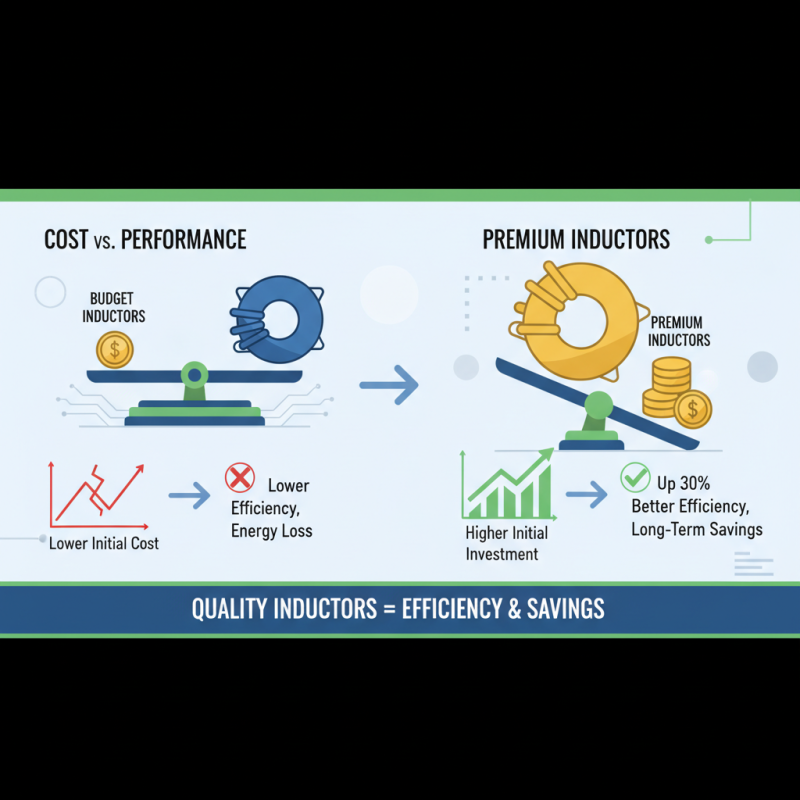
When selecting the right SMD inductor for your electronics project, understanding the balance between cost and performance is crucial. A recent industry report highlighted that while budget constraints often limit choices, opting for higher-quality inductors can result in better efficiency and lower energy losses, ultimately saving costs in the long run. According to a study by the Electronics Component Association, using high-performance inductors can improve overall circuit efficiency by up to 30%, making them a worthwhile investment for performance-focused applications.
Tips: Always consider the inductor's saturation current and DC resistance, as these parameters significantly impact the overall performance and efficiency of your design. Selection should be based not only on the price but also on the specific requirements of your project, including operating frequency and environmental conditions.
Moreover, balancing cost and performance requires careful consideration of the intended application. For instance, in high-frequency applications, a slightly more expensive inductor with higher Q factor may yield better results than a cheaper alternative, which may not support the required frequency response. Assessing the long-term implications of your choice, rather than focusing solely on upfront costs, will lead to more effective outcomes in your electronics projects.
Tips: Familiarize yourself with the specifications and performance curves available in datasheets, as these provide critical information that can inform your decision-making process for inductors. Prioritize designs that require robustness and reliability over initial savings when selecting components.
Harnessing Power Efficiency: A Comprehensive Analysis of ET5030 Series Molding Power Inductors for Optimal Energy Management in Modern Applications
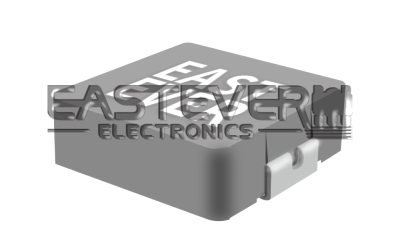
The ET5030 series molding power inductors represent a significant advancement in energy management, catering to the increasing demand for high efficiency in modern applications. Designed with a low profile and minimal DC resistance (DCR), these inductors ensure optimal performance under varying conditions. Operating effectively within a wide temperature range of -55℃ to +125℃, they are suitable for a diverse array of environments while maintaining high current carrying capacity and low core loss. The magnetically shielded construction further enhances their reliability by minimizing electromagnetic interference (EMI), which is crucial for maintaining the integrity of high-frequency circuits.
In terms of applications, the ET5030 series excels in several critical areas, including voltage regulator modules (VRMs) for servers, DC switching power supply circuits, and DC/DC converters for CPUs in various computing devices. These inductors play a pivotal role in ensuring stable power delivery necessary for solid-state drive (SSD) modules, significantly improving overall system reliability and efficiency. With a frequency range capable of reaching up to 5MHz, the ET5030 series is engineered for high power efficiency, providing a robust solution for energy management in today’s technologically advanced environment.
FAQS
C resistance (ACR) in inductors?
Temperature considerations are crucial because inductors generate heat during operation. An inductor that exceeds its rated temperature can lead to performance degradation or failure, affecting the overall reliability of the circuit.
Size is significant in compact electronic designs where space is limited. The inductor's footprint and height must align with the PCB layout. A careful balance between size and performance is necessary, as smaller inductors may have lower current ratings or higher equivalent series resistance (ESR), potentially impacting efficiency.
Important parameters to look for include inductance value, current rating, resistance, saturation current, temperature coefficient, and thermal resistance. These metrics greatly influence the inductor's efficiency, performance, and heat dissipation capability.
Saturation current is essential as an inductor that reaches this point may experience decreased performance, particularly in power supply applications. It’s advisable to choose inductors with a safety margin of at least 20% above the rated current for reliable operation.
It is generally recommended to maintain a maximum temperature rise of around 40°C above ambient conditions to ensure optimal operation and prevent overheating, which could impair circuit performance.
Skin effect increases resistance at higher frequencies by causing current to flow primarily at the surface of the conductor. Proximity effect leads to non-uniform current distribution in the inductor's windings, both contributing to increased AC resistance and potential performance issues in high-frequency applications.
In low-power applications, selecting an inductor with a lower DC resistance (DCR) is vital, as it indicates less energy wasted as heat, enhancing overall circuit efficiency.
Assessing thermal characteristics, including rated temperature and self-heating behavior under maximum load conditions, is important to prevent overheating and ensure the long-term reliability and performance of the inductor in the circuit.
Conclusion
Choosing the right SMD inductor is crucial for the success of your electronics project. Understanding the various types of SMD inductors and their specific applications is essential, as is being aware of key specifications such as DC resistance and AC resistance. These factors not only influence the performance of your circuit but also play a role in calculating the necessary inductance value tailored to your project's requirements.
Additionally, constraints related to temperature and size must be taken into account, ensuring that the selected SMD inductor fits within the desired parameters. Evaluating manufacturer data sheets can provide valuable insights into the performance capabilities of different inductors, while considering the balance between cost and performance can help in making a well-informed decision. By carefully analyzing these aspects, you can select the most appropriate SMD inductor that meets the needs of your electronic design effectively.

 +86-15916242887
 CONTACT US