Picking the right Isolation Inductorfor your project isn’t always straightforward, and honestly, it can be pretty tricky. A lot of engineers struggle with making that call. Dr. Emily Chen over at Magnetic Components Inc. puts it nicely—she says, "The right Isolation Inductor can really make or break your circuit’s performance." So true, right?
When you're on the hunt for an Isolation Inductor, it’s super important to pay attention to specs like inductance, current rating, and DC resistance. These little details can seriously impact how well your design works. For example, if you pick the wrong one, you might end up losing energy unnecessarily—that's frustrating! Not all inductors are the same, so understanding what your circuit actually needs is key.
And let’s not forget about size and cost. Sure, budget’s a big deal, but skimping on quality isn’t the way to go. A reliable Isolation Inductor might seem a bit pricey upfront, but trust me, it pays off in the long run, saving you headaches and money. Every project has its own quirks, so you’ve gotta think it through. Manufacturers usually have some guidance on this, but at the end of the day, it’s up to us engineers to really evaluate if those suggestions match what we need.
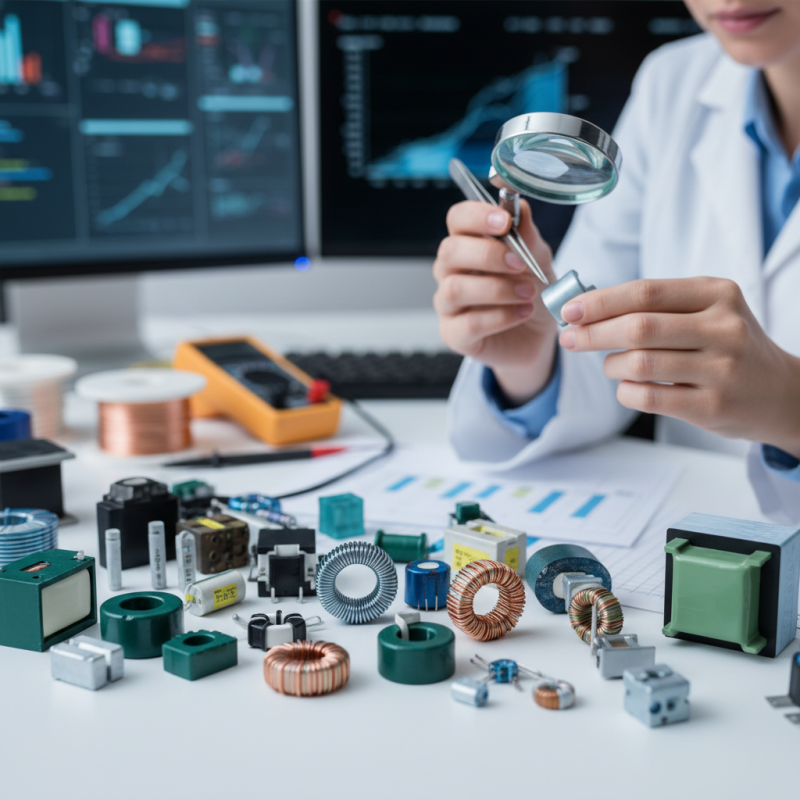
Factors to Consider When Selecting Isolation Inductors
When selecting Isolation Inductors, several factors deserve attention. The inductor's core material plays a crucial role. Materials like ferrite and powdered iron have different saturation levels and thermal resistances. Ferrite is known for high-frequency applications, while powdered iron inductors handle higher currents but may lack efficiency in very high frequencies. A detailed report states that core material affects efficiency by as much as 20% in certain applications.
Next, consider the inductance value required for your project. Inductance determines how well the inductor can filter out unwanted noise. Too low of a value may let noise pass through, while too high could affect performance. The balance is critical. According to industry studies, a mismatch in inductance could result in up to a 15% drop in performance efficiency.
Thermal management also cannot be neglected. Inductors generate heat during operation, which affects longevity. Ensuring adequate airflow or using heat sinks improves lifespan. Moreover, choosing the right type of Isolation Transformer for your application can further enhance heat dissipation. Proper design in this aspect can prevent performance degradation over time. Testing and prototyping can expose potential inefficiencies and pave the way for better design choices.
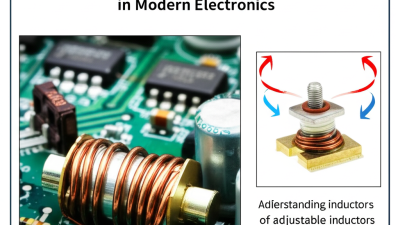
Isolation Inductor Selection Factors
Understanding Inductor Types: Air-Core vs. Ferrite-Core
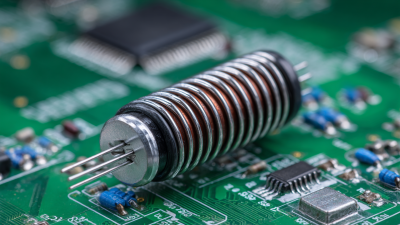
When it comes to selecting an Isolation Inductor, understanding the differences between air-core and ferrite-Core Inductorsis crucial. Air-Core Inductors are simple in design and do not saturate easily. They can handle higher frequencies well, making them ideal for RF applications. However, they tend to be larger and less efficient at lower frequencies. Data shows that air-Core Inductors have a lower quality factor (Q) at these frequencies, which may not suit every project.
Ferrite-Core Inductors, on the other hand, are compact and efficient. They provide excellent inductance at lower frequencies and have a higher Q factor.Manufacturers often report that ferrite-Core Inductors achieve up to 50% better efficiency compared to their air-core counterparts. However, they can saturate under high current conditions. Designers must be cautious about current ratings in their applications. If you need an Rf Isolation Transformer, consider ferrite cores for optimal efficiency.
Tips: Always calculate the expected current for your project. Choose an inductor that can handle it comfortably. Testing is essential; don't rely solely on specifications. Measure inductance and resistance under real operating conditions to avoid surprises. Every application is unique. Your choice should adapt to your specific needs.
Evaluating Inductor Ratings: Current, Voltage, and Saturation Levels
When selecting the best Isolation Inductor for your project, evaluating its ratings is crucial. Key parameters include current, voltage, and saturation levels. Each rating influences performance in distinct ways. Current ratings determine how much current the inductor can carry without overheating. It’s a critical factor for ensuring longevity and reliability.
Voltage ratings are equally essential. They indicate the maximum voltage the inductor can handle before breaking down. Exceeding this can lead to failures. Also, you should consider the saturation level. This indicates the point at which the inductance drops significantly as current increases. Knowing these limits can help avoid potential issues during operation.
While you might believe that higher ratings always mean better performance, that’s not true. Over-specifying can add unnecessary costs and size. Additionally, many projects require balance between ratings and application needs. It may take trial and error to find optimal specifications. An ideal choice fits the project’s requirements without unnecessary excess. Careful consideration is key.
The Role of Inductance Value in Isolation Applications
When selecting the best isolation inductor for your project, the inductance value plays a crucial role. Inductance directly affects the magnetic flux linkage between the coil and the circuit, influencing performance. Industry data indicates that using an inductor with the correct inductance can improve efficiency by up to 25%. However, it's essential to assess the specific requirements of your application.
Choosing the right inductance value means considering your circuit's impedance and frequency characteristics. A mismatch can lead to unwanted oscillations or diminished performance. Many experts recommend aiming for a 1:1 High Isolation Coupled configuration when designing for isolation applications. This approach helps achieve stable performance and reliable interference rejection.
Tips: Don’t overlook temperature coefficients. They impact inductor performance significantly. Testing under various conditions may reveal unexpected behavior. Also, consider the physical size of the inductor. Compact designs may save space but could result in overheating or reduced inductance. Balancing size, performance, and isolation needs careful thought. Every detail counts.
Impact of Frequency on Inductor Performance in Isolation
Choosing the right isolation inductor greatly relies on frequency performance. Inductors are frequency-dependent components. Their behavior changes significantly as frequency varies. For instance, at low frequencies, inductors perform well and provide excellent isolation. However, as frequency increases, losses can spike, diminishing their effectiveness.
Industry reports indicate that inductors can exhibit a loss tangent greater than 0.2 at frequencies above 10 MHz. This loss can negatively impact system efficiency. The resonant frequency is also crucial. Beyond this point, inductors may not provide adequate isolation. Proper selection involves examining both inductance and loss characteristics at your target frequency.
Additionally, factors like core material and winding construction influence performance. Ferrite cores tend to perform better at high frequencies compared to air cores. However, they may introduce other complexities, like saturation. As a designer, you must balance these aspects carefully. The goal is to ensure optimal performance without sacrificing reliability. It’s a tough task, and attention to detail is critical for success.
Analyzing Temperature Coefficients and Environmental Factors
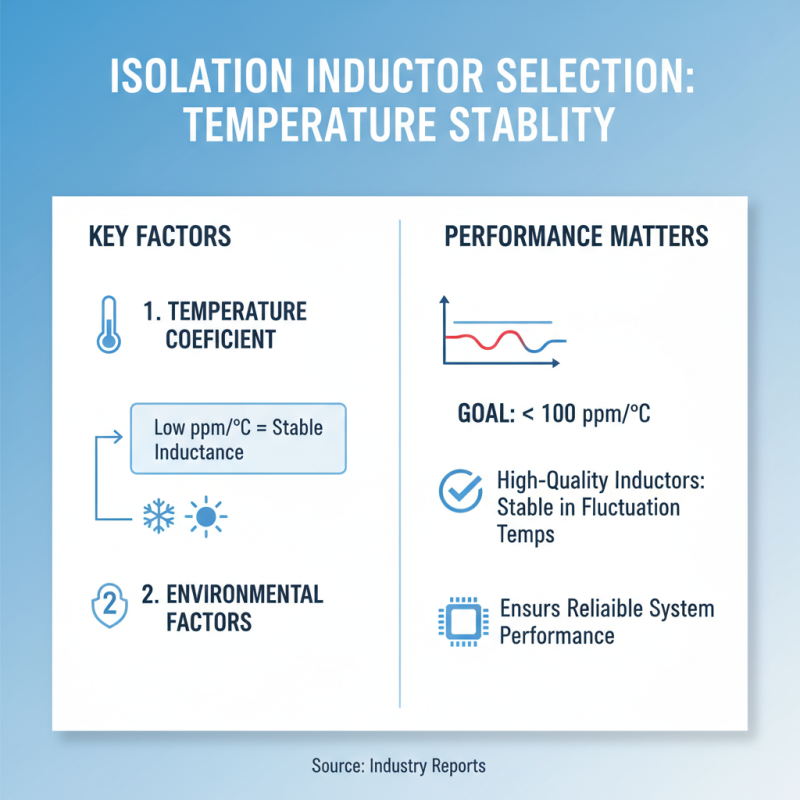
When selecting an isolation inductor, temperature coefficients and environmental factors play a crucial role. Temperature coefficients indicate how inductance changes with temperature. A high-quality inductor should have a low temperature coefficient to ensure stability in varying conditions. According to industry reports, inductors with a coefficient below 100 ppm/°C perform better in fluctuating temperatures.
Environmental factors add another layer of complexity. Humidity and exposure to corrosive elements can degrade inductors over time. It is essential to choose inductors with proper coatings or encapsulation. For example, a Low DC resistance rod choke inductor can provide durability in harsh environments. High humidity can increase the risk of shorts, so humidity ratings should be considered.
Proper thermal management also matters. Inductors generate heat, which can affect efficiency. Engineers should assess heat dissipation capabilities. Sometimes, a larger form factor is necessary to maintain temperature within safe limits. Overlooking these aspects can lead to performance issues. Reliability and longevity hinge on these careful considerations.
Cost-Benefit Analysis: Premium vs. Standard Isolation Inductors
When selecting isolation inductors for your project, a cost-benefit analysis is essential. Premium inductors often feature better thermal performance and higher efficiency. However, this might not always justify the extra cost for every application. Sometimes, a standard inductor can be sufficient. It's crucial to assess both initial and long-term costs. While premium models may reduce energy losses, standard ones might work well in low-demand environments.
Consider your project's specific needs. If it requires strict regulation, investing in a premium inductor could pay off. Look for specifications such as current rating and saturation point. These features can directly impact performance. On the other hand, if budget constraints are tight, a standard inductor may offer the necessary characteristics at a lower price. Always match the inductor’s ratings to your circuit requirements.
Tips: Evaluate the operational environment. If temperature varies significantly, a premium inductor might be necessary. Check for reviews and case studies. Sometimes, the experiences of others can reveal hidden drawbacks. Be mindful of your choices. Reflect on where the added cost might impact your overall project budget. Each project is unique, so your decision should align with specific needs and limits.
Enhancing Noise Suppression with SMTAM4024 Ferrite SMD Square Air Coils for Efficient DC/DC & DC/AC Inverter Applications
The SMTAM4024 Ferrite SMD Square Air Coils emerge as a pivotal component for enhancing noise suppression in DC/DC and DC/AC inverter applications. Their miniature scale and high Q factor make them ideally suited for high-frequency operations where efficient performance is essential. By incorporating these coils into electronic systems, engineers can achieve significant improvements in signal clarity and overall device reliability, essential for applications ranging from mobile communication to advanced digital television tuners.
One of the esteemed features of these coils is their RoHS compliance, which aligns with the growing demand for environmentally friendly electronic components. This ensures that devices equipped with SMTAM4024 coils not only meet regulatory standards but also support sustainable practices. Additionally, their resistance to humidity and ease of bonding facilitate integration into various electronic platforms, enhancing durability and performance in diverse environments. Applications extend to critical domains such as wireless LAN, Bluetooth equipment, and power amplifiers, underscoring the versatility and effectiveness of the SMTAM4024 Ferrite SMD Square Air Coils in modern electronic designs.
FAQS
: This product aims to enhance daily convenience. It simplifies tasks and saves time.
Regular cleaning is important. Use gentle soap and water. Avoid harsh chemicals.
Yes, but exposure to extreme weather may affect its durability. Store indoors if possible.
Longevity depends on usage and maintenance. Regular care can extend its lifespan.
Generally, it is designed for a wide audience. Supervision may be needed for young users.
Some users report wear over time. Reviewing care instructions may help prevent issues.
Check warranty options first. Repairs are possible, but assessing usability is important.
Return policies vary. Always read guidelines before purchasing. It’s crucial to stay informed.
Some assembly may be necessary. Instructions should be clear, but confusion can happen.
Yes, follow usage guidelines closely. Awareness can prevent accidents or misuse.
Conclusion
When choosing the best isolation inductor for your project, several key factors must be considered. Understanding the differences between air-core and ferrite-core inductors is crucial, as each type offers distinct advantages based on application requirements. Furthermore, evaluating the inductor's ratings—including current, voltage, and saturation levels—is essential to ensure optimal performance under the specific conditions of your project.
Inductance value also plays a significant role in isolation applications, influencing both performance and efficiency. It's important to consider how frequency impacts inductor performance, along with temperature coefficients and environmental factors that may affect the inductor’s function over time. Lastly, a cost-benefit analysis comparing premium versus standard isolation inductors can help you make an informed decision that aligns with your project's budget and performance needs.

 +86-15916242887
 CONTACT US